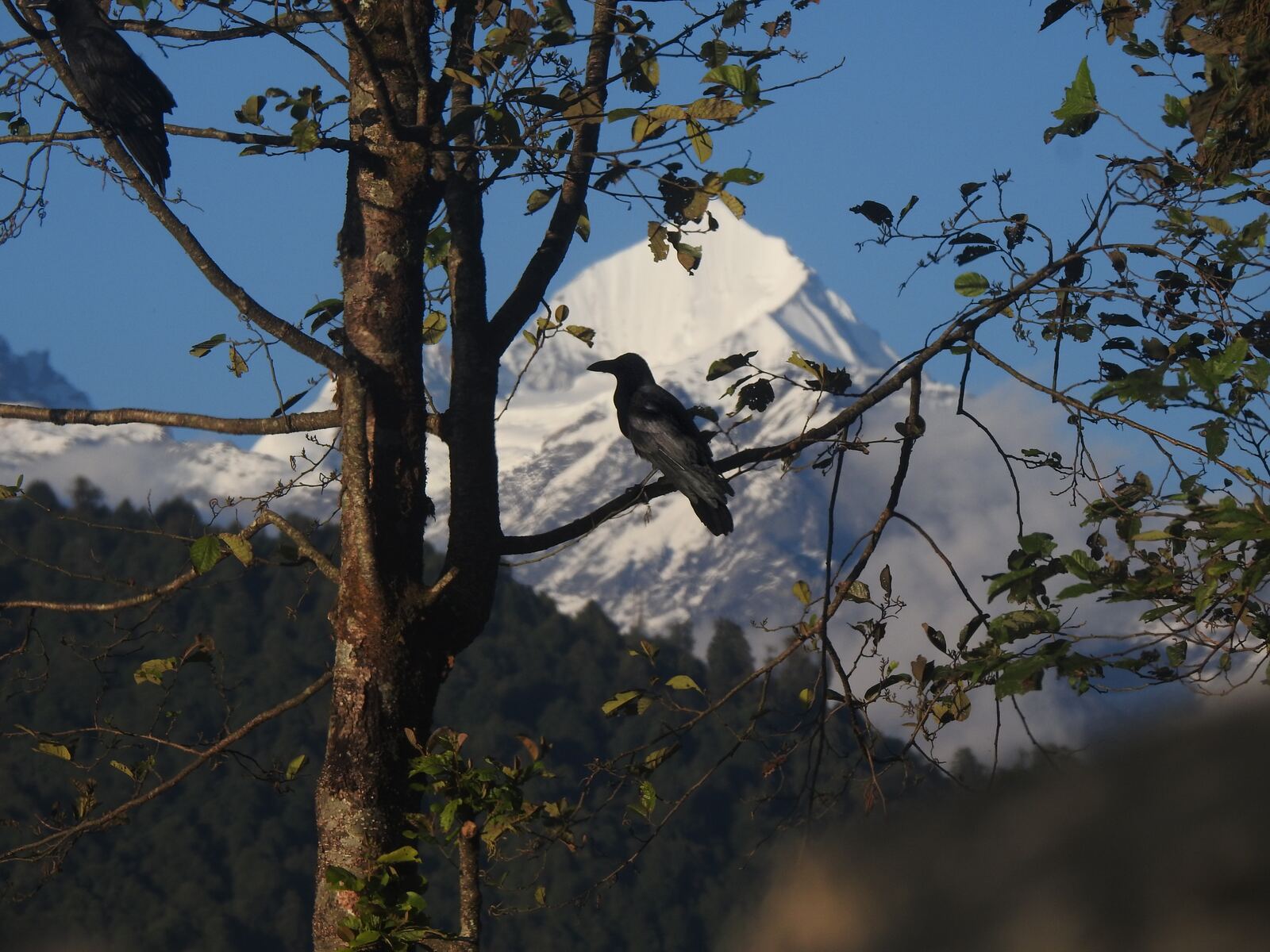
Birding in Nepal
Nepal has 902 species of birds, about 9% of all the birds in the world. The land rises from about 60 m in the Terai lowlands to 8,849 m at the top of Everest, so one trip can take you from hornbills in the sal forest to monals on an alpine ridge. The main birding season runs from October to May.
I'm Krishna Thapa, a birding guide from Kathmandu. Here is where to go, the birds to expect and the best months for each place, with the trips I lead.
Why is Nepal so good for birds?
Nepal sits where the birds of the Indian lowlands meet those of the Himalaya and the Tibetan plateau. One trip can climb from forest full of hornbills and kingfishers, through misty rhododendron loud with laughingthrushes, to alpine ridges where lammergeiers sail.
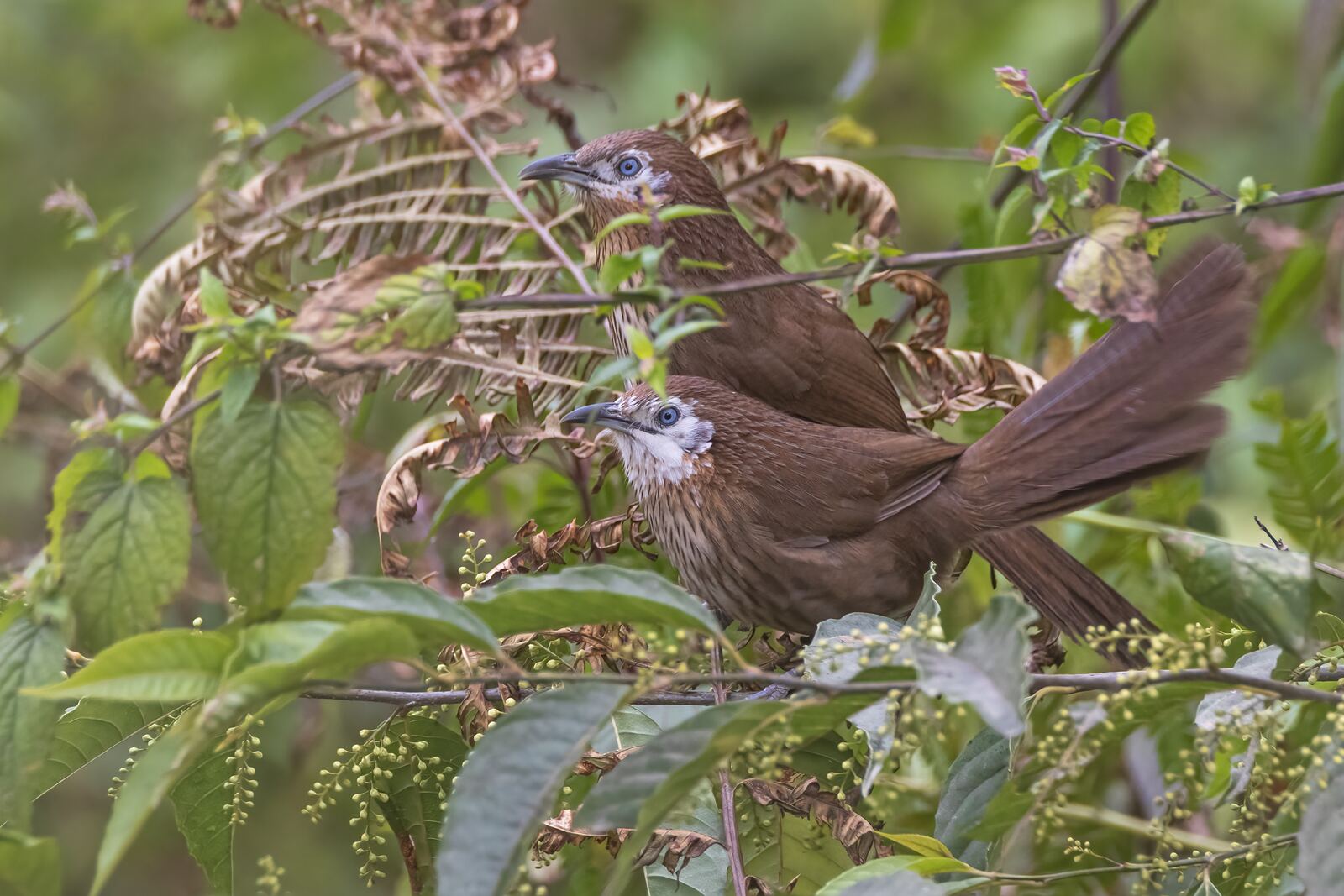
One bird lives nowhere else: the Spiny Babbler, Nepal's only endemic, singing in the scrub around Kathmandu.
Birding fits easily around a safari, a trek or Kathmandu's temples.
High Himalaya
Fir, birch and rhododendron up to the tree line at about 4,000 m, then alpine meadow, scree and snow.
Best months: March to May and October to November
Himalayan Monal
Lophophorus impejanus
Blood Pheasant
Ithaginis cruentus
Lammergeier
Gypaetus barbatus
Grandala
Grandala coelicolor
3,000 mMiddle hills
Oak, rhododendron and pine forest, terraced hillsides and fast, clear rivers.
Best months: October to May
Spiny Babbler
Turdoides nipalensis
Mrs. Gould's Sunbird
Aethopyga gouldiae
Spotted Laughingthrush
Garrulax ocellatus
Kalij Pheasant
Lophura leucomelanos
1,000 mTerai lowlands
Sal forest, tall grassland, slow rivers and wetlands along the border with India.
Best months: October to April
Great Hornbill
Buceros bicornis
Bengal Florican
Houbaropsis bengalensis
Stork-billed Kingfisher
Pelargopsis capensis
Sarus Crane
Antigone antigone
60 m
Where to go birding in Nepal
From the lowland parks in the south to the high valleys under the Himalaya: the places I go back to most, with their birds, best months and trips.
Phulchowki and the Kathmandu Valley
Best months: February to April and October to November
A short drive from the city, Phulchowki climbs through oak and rhododendron forest to 2,782 m: the best birding near Kathmandu, for laughingthrushes, niltavas, sunbirds and warblers. Half a day is enough; Shivapuri, across the valley, makes another fine morning.
Birds you can expect
Kalij Pheasant
Lophura leucomelanos
Spiny Babbler
Turdoides nipalensis
Hill Partridge
Arborophila torqueola
Scarlet Minivet
Pericrocotus speciosus
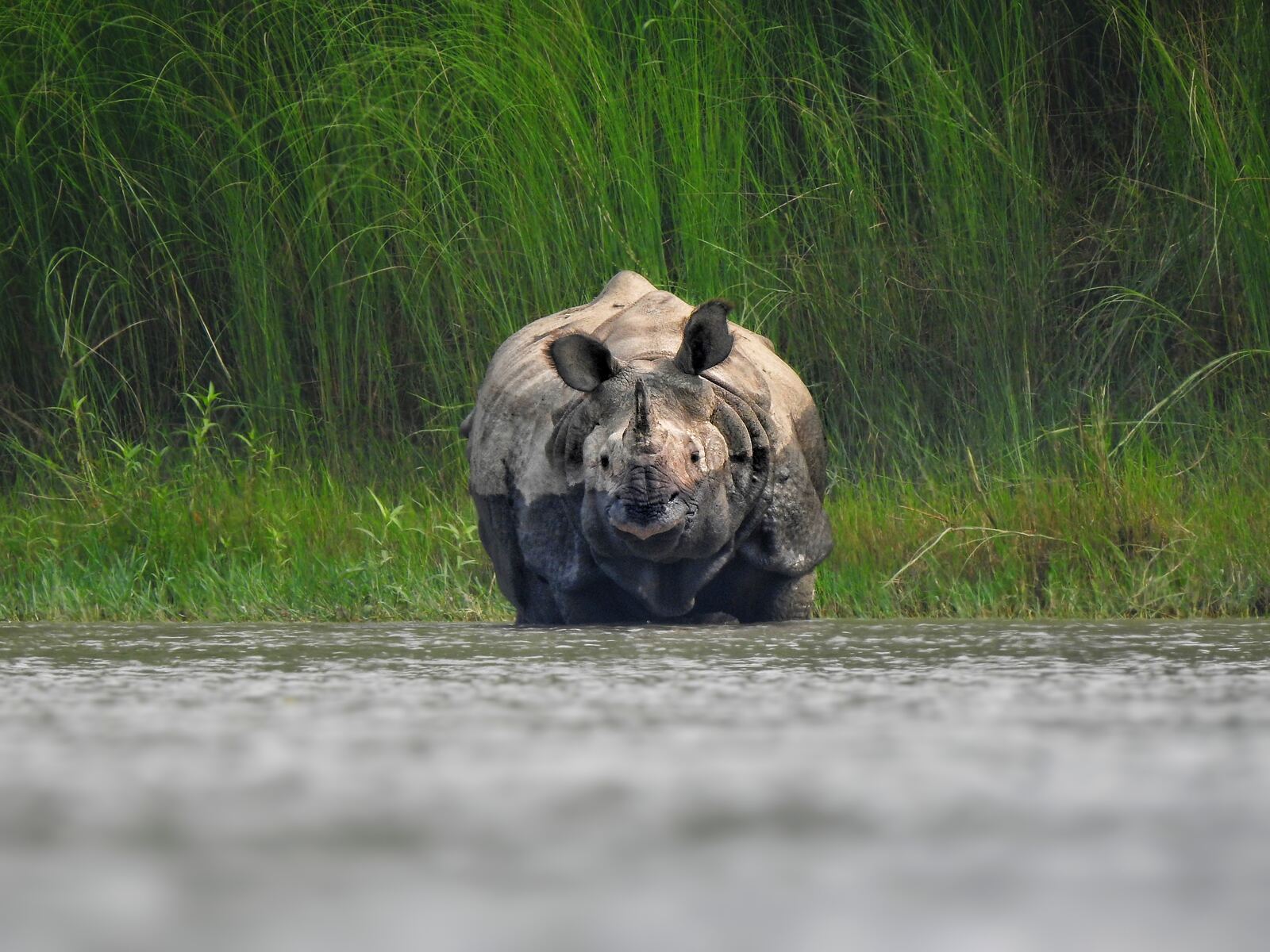
Greater One-horned Rhinoceros
Rhinoceros unicornis
Chitwan National Park
Chitwan National Park
Best months: October to March
Nepal's first national park, a World Heritage Site, and one of Asia's best lowland birding spots. Sal forest, grassland and rivers hold hornbills, kingfishers, storks and raptors, Bengal Florican displaying in spring, and rhinos, gharials and, with luck, a tiger.
Birds you can expect
Bengal Florican
Houbaropsis bengalensis
Indian Pitta
Pitta brachyura
Great Hornbill
Buceros bicornis
Oriental Pied Hornbill
Anthracoceros albirostris
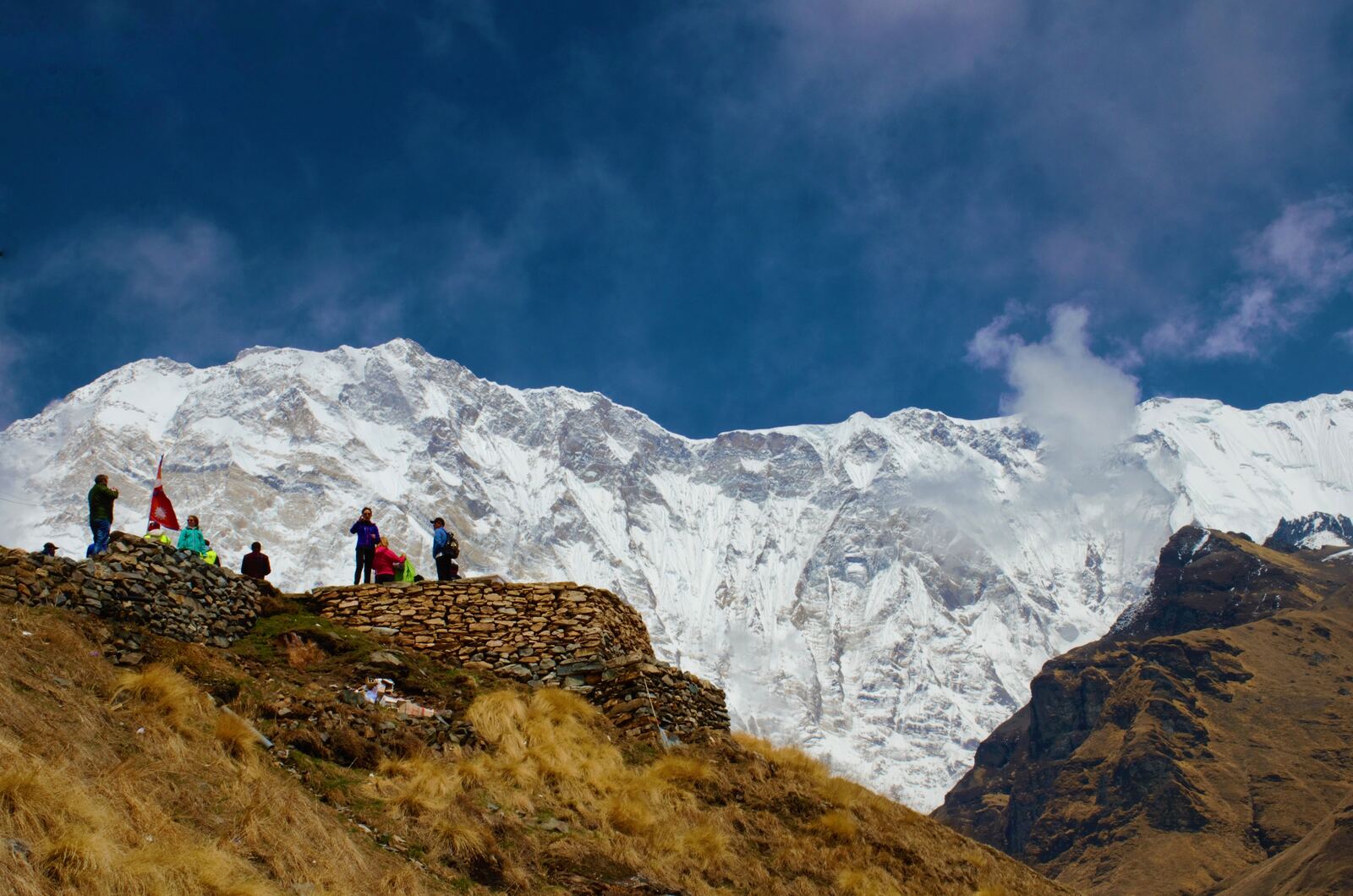
Pokhara and the Annapurna foothills
Best months: March to May and October to November
Pokhara's lakes hold wintering ducks and kingfishers. Above them rises the Annapurna Conservation Area, Nepal's largest: on the trails to the Sanctuary and Mardi Himal look for Himalayan Monal, the national bird, Satyr Tragopan and lammergeiers, under Machhapuchhre.
Birds you can expect
Himalayan Monal
Lophophorus impejanus
Satyr Tragopan
Tragopan satyra
Tibetan Snowcock
Tetraogallus tibetanus
Lammergeier
Gypaetus barbatus
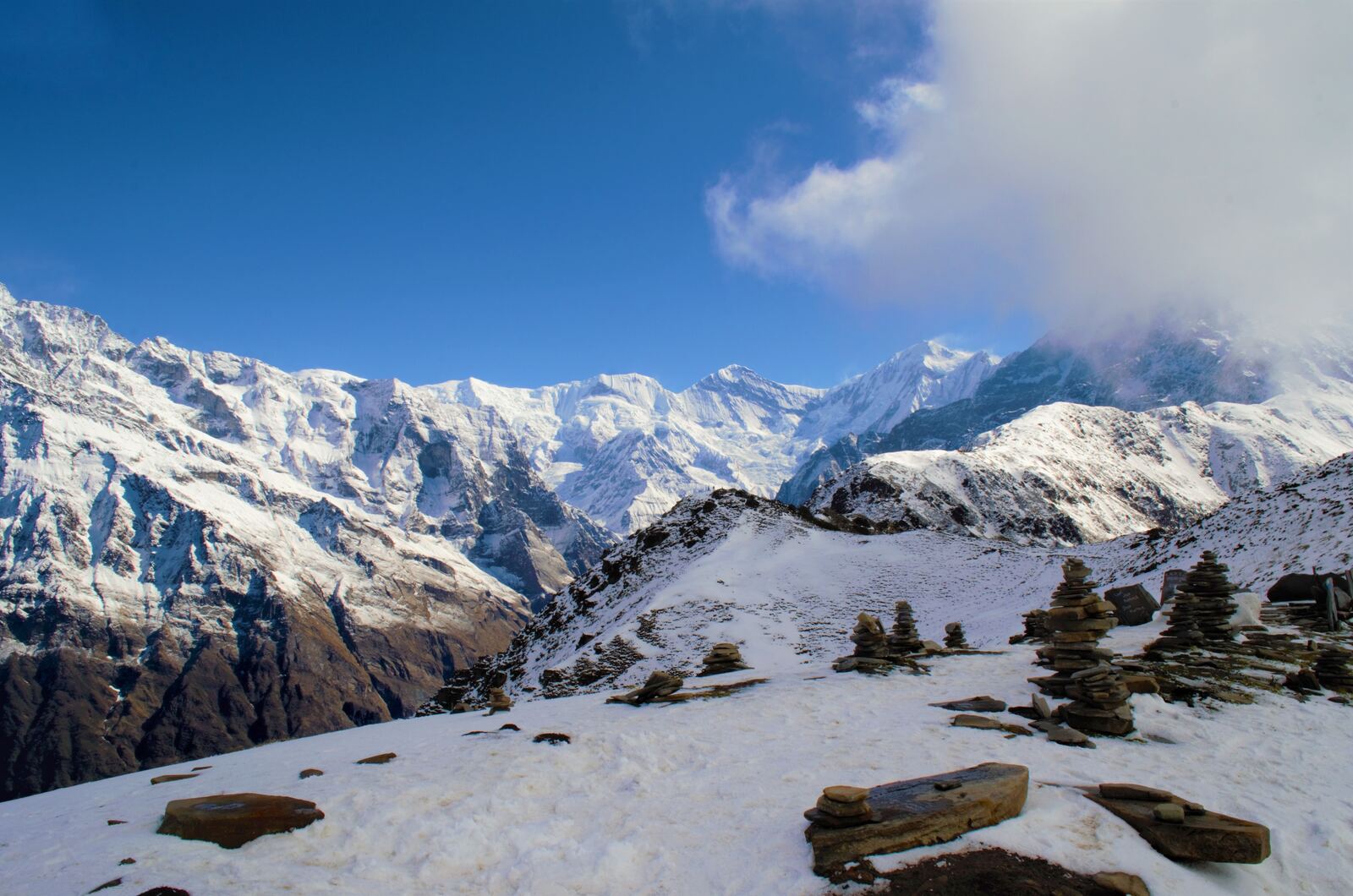
Langtang and Gosaikunda
Best months: March to May and October to November
The high mountains closest to Kathmandu. Trails climb from warm gorges through rhododendron and fir to Gosaikunda's sacred lakes at 4,380 m. Red pandas live in the forest, Ibisbill on the river shingle, Wallcreepers on the rock faces.
Birds you can expect
Himalayan Monal
Lophophorus impejanus
Blood Pheasant
Ithaginis cruentus
Snow Pigeon
Columba leuconota
Himalayan Griffon
Gyps himalayensis
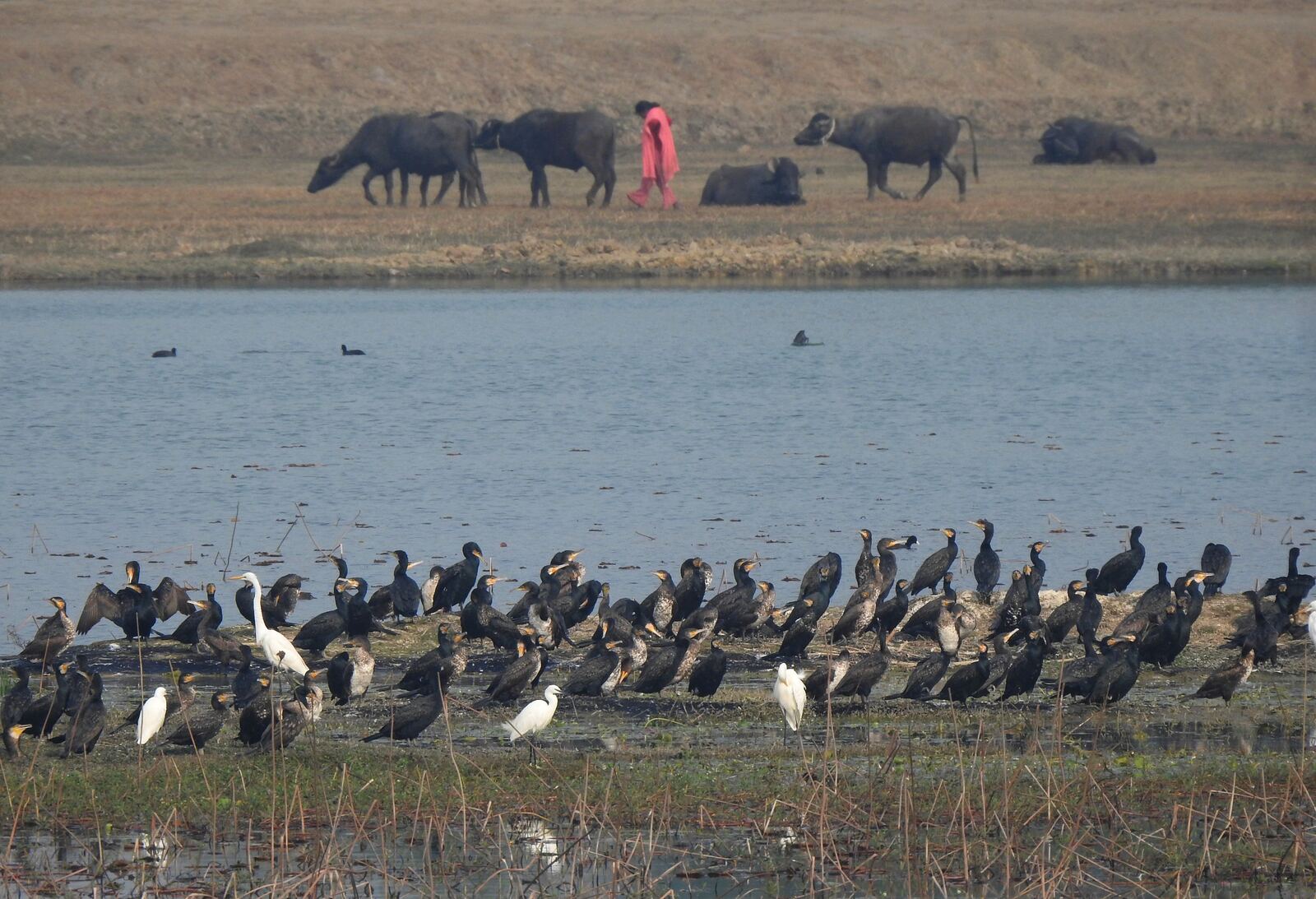
Koshi Tappu Wildlife Reserve
Best months: November to February
Nepal's best-known wetland, on the braided Sapta Koshi river in the east. In winter its marshes and sandbars fill with ducks, waders, terns and raptors, wild water buffalo graze the edges and the wet grass hides the Swamp Francolin.
Birds you can expect
Swamp Francolin
Francolinus gularis
Ruddy Shelduck
Tadorna ferruginea
Northern Pintail
Anas acuta
Bronze-winged Jacana
Metopidius indicus
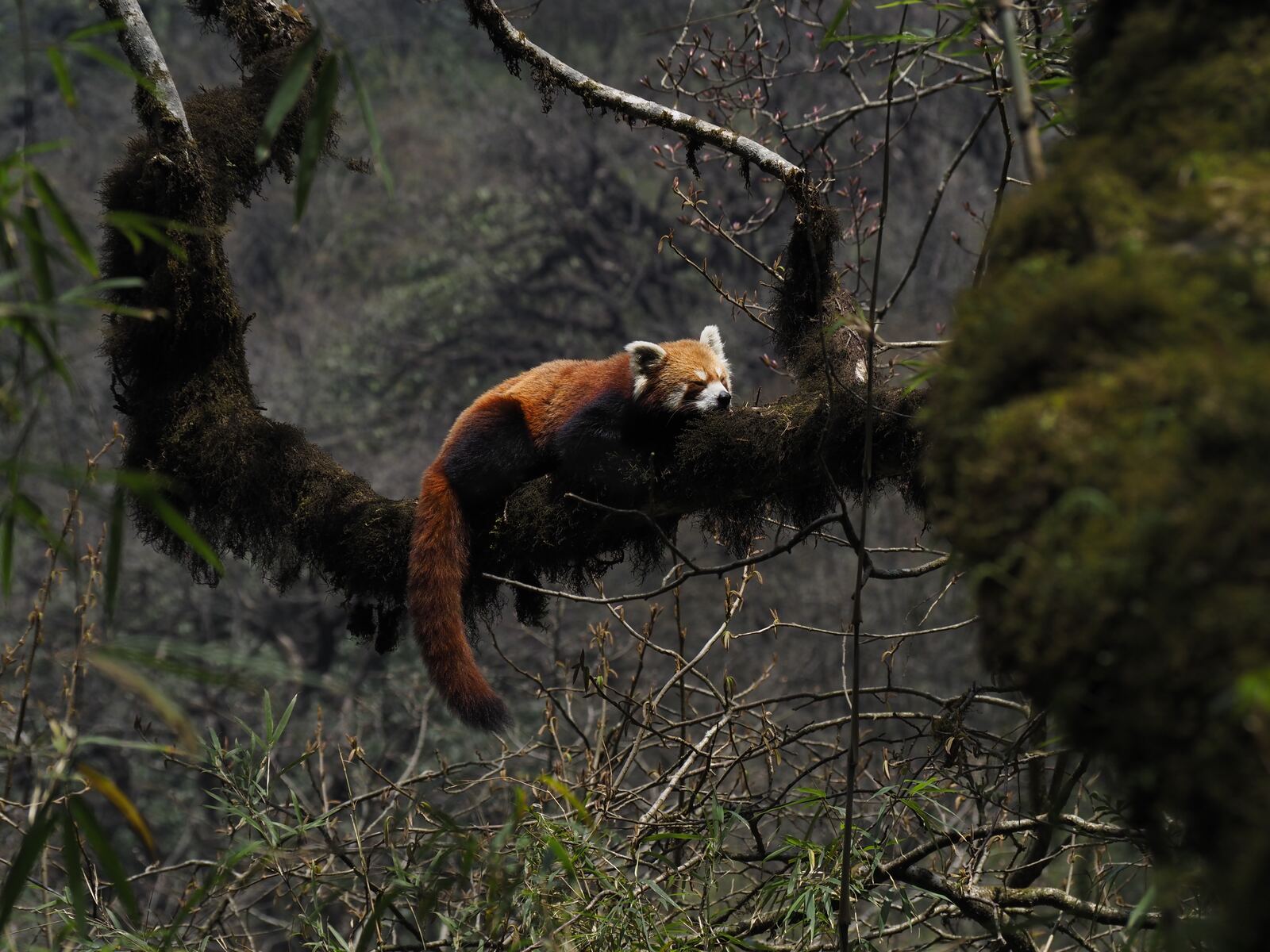
Red Panda
Ailurus fulgens
Ilam and the far east
Best months: March to May and October to December
Red panda forest on the Sandakpur ridge above Ilam's tea gardens, with Kanchenjunga, the world's third highest mountain, on the skyline. The bamboo and rhododendron hold parrotbills, fulvettas, Fire-tailed Myzornis and Satyr Tragopan: slow, patient birding.
Birds you can expect
Rufous-throated Wren-Babbler
Spelaeornis caudatus
Spiny Babbler
Turdoides nipalensis
Hoary-throated Barwing
Actinodura nipalensis
White-rumped Vulture
Gyps bengalensis
Trips here
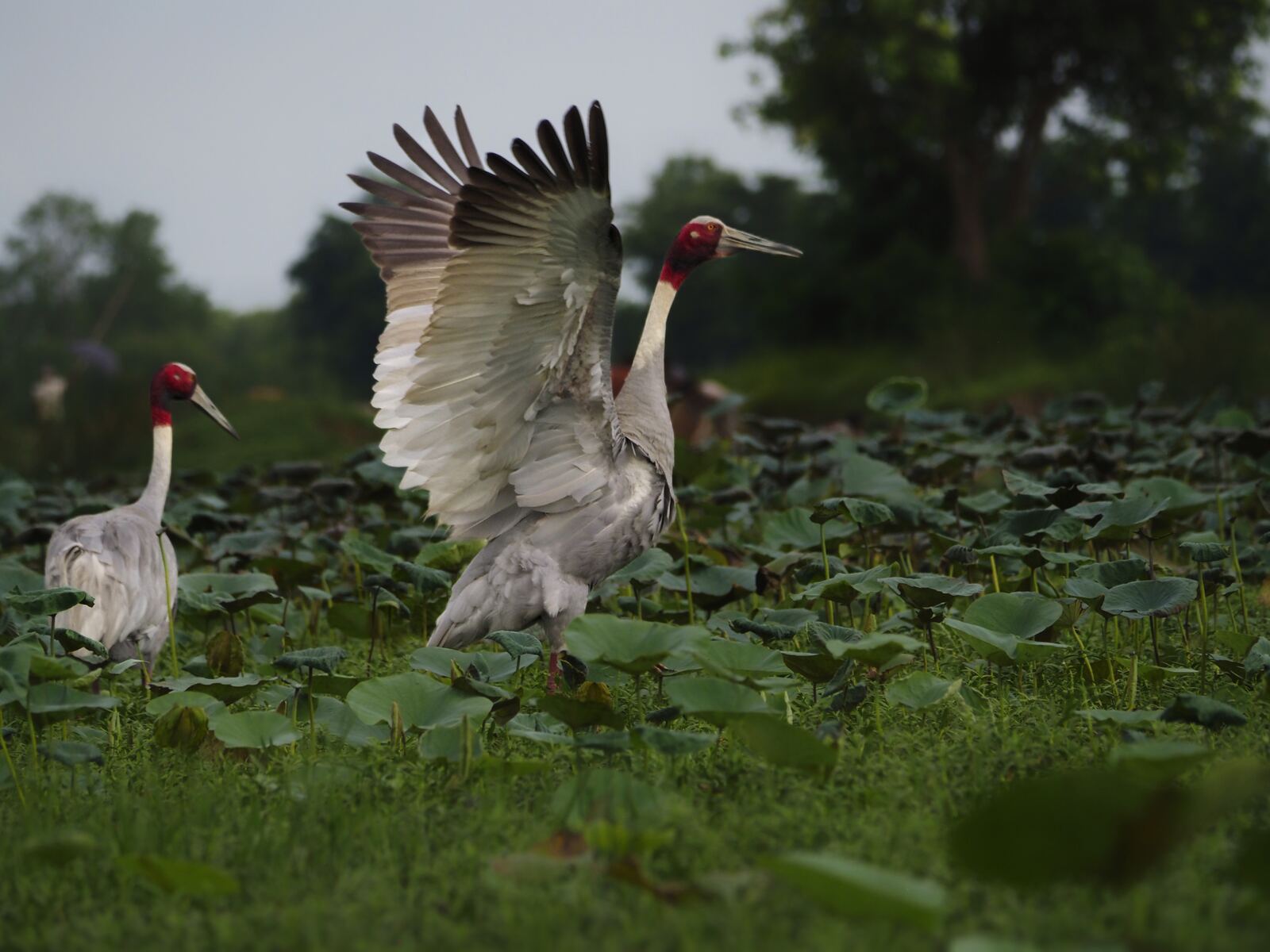
Sarus Crane
Antigone antigone
Bardia, Lumbini and the western lowlands
Best months: February to May and October to November
Chitwan's wilder, quieter cousin: sal forest and grassland on the Karnali river. Great Slaty Woodpecker, hornbills and River Terns share it with tigers, elephants and river dolphins. Near Lumbini, the Buddha's birthplace, the wetlands hold Sarus Cranes and waterbirds.
Birds you can expect
Sarus Crane
Antigone antigone
Great Slaty Woodpecker
Mulleripicus pulverulentus
Lesser Adjutant
Leptoptilos javanicus
White-rumped Vulture
Gyps bengalensis
When is the best time to go birding?
The main birding season runs from October to May: spring and autumn in the mountains, winter in the lowlands, when the wetlands are full. Tell me the birds you most want to see and I'll suggest the dates.
Pick a month and a kind of birds. The land lights up where many of them are about, and dims where few are.
January~650about 650 speciesLowlands 457Hills 475Himalaya 21086 birds ↓
Birds in January
Ibisbill
Ibidorhyncha struthersii
Langtang, Manang · Hills, 1,000–3,000 m · ALL YEAR
Breeds on high shingle rivers; in winter some follow the rivers down, as far as Chitwan.
Bar-headed Goose
Anser indicus
Koshi Tappu, Chitwan · Lowlands, below 1,000 m · NOV–APR
Crosses the Himalaya in a single day's flight; some spend the winter on the big lowland rivers.
Rufous-bellied Niltava
Niltava sundara
Kathmandu Valley, Annapurna · Hills, 1,000–3,000 m · ALL YEAR
Deep blue and orange in shady forest; comes lower in winter.
White-throated Bushchat (Hodgson's Bushchat)
Saxicola insignis
Shuklaphanta, Koshi Tappu · Lowlands, below 1,000 m · NOV–APR
Comes from the mountains of Mongolia to spend the winter in tall lowland grass.
Wallcreeper
Tichodroma muraria
Annapurna, Langtang · Hills, 1,000–3,000 m · ALL YEAR
A grey bird that flicks crimson wings like a butterfly on cliffs; in winter it comes down to river boulders and old walls.
Red-throated Flycatcher
Ficedula albicilla
Chitwan, Kathmandu Valley · Lowlands, below 1,000 m · SEP–APR
A tiny flycatcher that cocks and flicks its black-and-white tail from every winter bush, with a dry little rattle.
Show all 86 birds of January
Pallas's Fish-eagle
Haliaeetus leucoryphus
Koshi Tappu, Chitwan · Lowlands, below 1,000 m · ALL YEAR
Nests in winter in tall trees by the big rivers; its yelping call carries a long way.
White-rumped Vulture
Gyps bengalensis
Nawalparasi, Chitwan · Lowlands, below 1,000 m · ALL YEAR
Nests in colonies in tall silk-cotton trees in winter; community vulture restaurants in the lowlands give them safe food.
Blood Pheasant
Ithaginis cruentus
Langtang, Annapurna · Himalaya, above 3,000 m · ALL YEAR
Small flocks scratch in the snow under rhododendron and fir, the males splashed with crimson.
Ruddy Shelduck
Tadorna ferruginea
Koshi Tappu, Chitwan · Lowlands, below 1,000 m · OCT–APR
Orange ducks honking along the lowland rivers all winter.
Baer's Pochard
Aythya baeri
Koshi Tappu · Lowlands, below 1,000 m · NOV–MAR
A dark diving duck with a pale eye, wintering on the Koshi barrage lagoons.
Northern Pintail
Anas acuta
Koshi Tappu, Ghodaghodi · Lowlands, below 1,000 m · OCT–APR
Long-tailed, elegant ducks gathering in rafts on the Koshi in winter.
Grandala
Grandala coelicolor
Langtang, Annapurna · Himalaya, above 3,000 m · ALL YEAR
In winter, flocks of electric-blue birds swirl over the high ridges.
Black Stork
Ciconia nigra
Koshi Tappu, Chitwan · Lowlands, below 1,000 m · OCT–APR
Glossy black, red bill and legs; a few winter on quiet lowland rivers.
White Stork
Ciconia ciconia
Koshi Tappu, Lumbini · Lowlands, below 1,000 m · NOV–MAR
A few spend the winter on the lowland fields and marshes, tall and white among the Black Storks and egrets.
Citrine Wagtail
Motacilla citreola
Koshi Tappu, Chitwan · Lowlands, below 1,000 m · SEP–MAY
Lemon-headed wagtails walking the wet edges of lakes and rice stubble all winter.
Goosander
Mergus merganser
Narayani, Trishuli · Lowlands, below 1,000 m · NOV–MAR
Sleek sawbill ducks that ride the cold, fast rivers where they leave the hills.
Bluethroat
Luscinia svecica
Koshi Tappu, Chitwan · Lowlands, below 1,000 m · OCT–APR
Skulks along reedy ditches, then hops into the open with a sky-blue bib and a rusty flash in the tail.
Siberian Rubythroat
Calliope calliope
Chitwan, Koshi Tappu · Lowlands, below 1,000 m · OCT–APR
From Siberia to the lowland grass for the winter: a brown robin with a throat like a glowing ruby.
Cinereous Vulture
Aegypius monachus
Pokhara, Nawalparasi · Lowlands, below 1,000 m · NOV–APR
A huge, dark vulture from the north that joins the gatherings at the vulture restaurants in winter.
Greater Spotted Eagle
Clanga clanga
Koshi Tappu, Chitwan · Lowlands, below 1,000 m · OCT–APR
A dark winter eagle that sits hunched by the marshes, then quarters the wet grassland.
Pied Harrier
Circus melanoleucos
Koshi Tappu, Chitwan · Lowlands, below 1,000 m · OCT–APR
The black-and-white male floats low over the tall grass like a paper kite.
Black-throated Thrush
Turdus atrogularis
Kathmandu Valley, Pokhara · Hills, 1,000–3,000 m · NOV–APR
Flocks come down from Central Asia for the winter berries, and to hop across lawns and terraces.
Common Crane
Grus grus
Kali Gandaki, Lumbini · Lowlands, below 1,000 m · OCT–MAR
Some fly in down the Kali Gandaki with the Demoiselles; small grey flocks bugle over the lowland fields all winter.
Blue-fronted Redstart
Phoenicurus frontalis
Langtang, Annapurna · Hills, 1,000–3,000 m · ALL YEAR
Blue and orange, quivering its tail; it breeds near the treeline and spends the winter in the hills.
Himalayan Bluetail
Tarsiger rufilatus
Langtang, Annapurna · Hills, 1,000–3,000 m · ALL YEAR
A bright blue robin with orange flanks; it breeds in high forest and winters in the valleys below.
Bengal Florican
Houbaropsis bengalensis
Koshi Tappu, Shuklaphanta · Lowlands, below 1,000 m · ALL YEAR
In spring, before the grass grows tall, the males leap up out of it, flap and float back down, again and again.
Great Hornbill
Buceros bicornis
Chitwan · Lowlands, below 1,000 m · ALL YEAR
You hear it before you see it: wingbeats like a steam engine over the forest.
Oriental Pied Hornbill
Anthracoceros albirostris
Chitwan, Bardia · Lowlands, below 1,000 m · ALL YEAR
Pairs and noisy little parties on fruiting figs along the forest edge.
Spotted Owlet
Athene brama
Chitwan, Bardia · Lowlands, below 1,000 m · ALL YEAR
The little owl of villages and old trees, bobbing and glaring back at you at dusk.
Black-necked Stork
Ephippiorhynchus asiaticus
Chitwan, Bardia · Lowlands, below 1,000 m · ALL YEAR
A tall black-and-white stork on red legs, stalking the oxbow lakes.
Red-headed Vulture
Sarcogyps calvus
Chitwan, Bardia · Lowlands, below 1,000 m · ALL YEAR
Bare red head and white thigh patches; usually alone or in a pair at the edge of the crowd.
Slender-billed Vulture
Gyps tenuirostris
Chitwan, Nawalparasi · Lowlands, below 1,000 m · ALL YEAR
The slimmer-billed cousin of the White-rumped, often in the same tall trees.
Blue-eared Kingfisher
Alcedo meninting
Chitwan · Lowlands, below 1,000 m · ALL YEAR
A jewel-blue kingfisher of dark forest streams; the blue ear patch gives it away.
Stork-billed Kingfisher
Pelargopsis capensis
Chitwan, Bardia · Lowlands, below 1,000 m · ALL YEAR
A huge coral-red bill and a laughing call along the slow rivers.
Pied Kingfisher
Ceryle rudis
Chitwan, Koshi Tappu · Lowlands, below 1,000 m · ALL YEAR
Hovers over the water like a black-and-white kestrel, then plunges.
Sarus Crane
Grus antigone
Lumbini, Kapilvastu · Lowlands, below 1,000 m · ALL YEAR
The tallest flying bird, in pairs among the rice fields of the western lowlands; they dance and trumpet in the monsoon.
Great Slaty Woodpecker
Mulleripicus pulverulentus
Bardia, Chitwan · Lowlands, below 1,000 m · ALL YEAR
A big grey woodpecker moving in noisy family groups through old sal forest.
Lesser Adjutant
Leptoptilos javanicus
Chitwan, Bardia · Lowlands, below 1,000 m · ALL YEAR
A bald, hunched stork of marshes and grassland pools.
Jungle Owlet
Glaucidium radiatum
Bardia, Chitwan · Lowlands, below 1,000 m · ALL YEAR
A small barred owl that calls in daylight, a bubbling trill that runs up and down.
Brown Fish-owl
Ketupa zeylonensis
Bardia, Chitwan · Lowlands, below 1,000 m · ALL YEAR
A huge eared owl that waits by forest streams at dusk.
Painted Stork
Mycteria leucocephala
Bardia, Koshi Tappu · Lowlands, below 1,000 m · ALL YEAR
Pink-washed wings and a waxy yellow bill, wading through shallow lakes.
Oriental Darter
Anhinga melanogaster
Bardia, Chitwan · Lowlands, below 1,000 m · ALL YEAR
The snake-bird: swims with only its neck above water, then dries its wings on a snag.
Kalij Pheasant
Lophura leucomelanos
Kathmandu Valley, Annapurna · Lowlands, below 1,000 m · ALL YEAR
The pheasant you are most likely to meet, stepping across a forest trail in the hills.
Spiny Babbler
Acanthoptila nipalensis
Kathmandu Valley, Pokhara · Hills, 1,000–3,000 m · ALL YEAR
Nepal's own bird, found nowhere else: a streaky brown babbler that sings from the top of a scrubby bush in spring.
Hill Partridge
Arborophila torqueola
Kathmandu Valley · Hills, 1,000–3,000 m · ALL YEAR
Heard far more than seen: a mournful whistle repeated up the hillside.
Scarlet Minivet
Pericrocotus flammeus
Kathmandu Valley, Chitwan · Lowlands, below 1,000 m · ALL YEAR
Flocks of red males and yellow females sparkling through the treetops.
Great Barbet
Psilopogon virens
Kathmandu Valley, Annapurna · Hills, 1,000–3,000 m · ALL YEAR
Its loud, mewing 'pi-o' is the sound of the foothill forest in spring.
Himalayan Bulbul
Pycnonotus leucogenys
Kathmandu Valley, Pokhara · Hills, 1,000–3,000 m · ALL YEAR
A crested, white-cheeked bulbul, cheerfully common in gardens and scrub.
Spotted Forktail
Enicurus maculatus
Kathmandu Valley, Annapurna · Hills, 1,000–3,000 m · ALL YEAR
Black and white with a long forked tail, flitting along mossy streams.
Himalayan Cutia
Cutia nipalensis
Kathmandu Valley, Ilam · Hills, 1,000–3,000 m · ALL YEAR
Chestnut, slate and barred flanks, creeping along mossy oak branches.
Eurasian Jay (Himalayan form)
Garrulus bispecularis
Kathmandu Valley, Annapurna · Hills, 1,000–3,000 m · ALL YEAR
The Himalayan jay, cinnamon-headed and loud. The 2025 checklist lists it as Plain-crowned Jay.
Mountain Hawk-eagle
Nisaetus nipalensis
Kathmandu Valley, Annapurna · Hills, 1,000–3,000 m · ALL YEAR
A big crested forest eagle circling over the valley rim.
Besra
Accipiter virgatus
Kathmandu Valley · Hills, 1,000–3,000 m · ALL YEAR
A small forest hawk that dashes between the trees after songbirds.
Black Eagle
Ictinaetus malaiensis
Kathmandu Valley, Annapurna · Hills, 1,000–3,000 m · ALL YEAR
Glides slowly just over the canopy, long wingtip fingers spread, looking for nests.
Himalayan Monal
Lophophorus impejanus
Langtang, Annapurna · Himalaya, above 3,000 m · ALL YEAR
Nepal's national bird: the male shines copper, teal and violet on high slopes, and comes down into the forest in snowy winters.
Snow Pigeon
Columba leuconota
Langtang, Annapurna · Himalaya, above 3,000 m · ALL YEAR
Flocks wheel over high villages and cliffs, white bellies flashing.
Himalayan Griffon
Gyps himalayensis
Langtang, Annapurna · Hills, 1,000–3,000 m · ALL YEAR
A huge pale vulture riding the updrafts along the mountains; young birds wander down to the lowlands in winter.
Bearded Vulture (Lammergeier)
Gypaetus barbatus
Langtang, Annapurna · Himalaya, above 3,000 m · ALL YEAR
A golden-chested giant of the cliffs that drops bones from the air to break them.
Golden Eagle
Aquila chrysaetos
Langtang, Mustang · Himalaya, above 3,000 m · ALL YEAR
Hunts snowcocks and marmots over the high pastures.
Fire-tailed Sunbird
Aethopyga ignicauda
Langtang, Annapurna · Hills, 1,000–3,000 m · ALL YEAR
A scarlet sunbird with a long fiery tail, high among the rhododendrons in summer.
Red-billed Chough
Pyrrhocorax pyrrhocorax
Langtang, Mustang · Himalaya, above 3,000 m · ALL YEAR
Tumbling, calling flocks over high villages and barley fields.
Spotted Nutcracker
Nucifraga hemispila
Langtang, Annapurna · Hills, 1,000–3,000 m · ALL YEAR
Buries pine and walnut seeds for winter and remembers where. The 2025 checklist calls it Southern Nutcracker.
Himalayan Snowcock
Tetraogallus himalayensis
Langtang, Annapurna · Himalaya, above 3,000 m · ALL YEAR
A huge partridge of the scree; its far-carrying whistle drifts across the slopes at dawn.
Satyr Tragopan
Tragopan satyra
Annapurna, Ilam · Hills, 1,000–3,000 m · ALL YEAR
In spring the crimson male puffs out a blue-and-red throat lappet in display; shy in dense forest.
Tibetan Snowcock
Tetraogallus tibetanus
Mustang, Manang · Himalaya, above 3,000 m · ALL YEAR
The pale snowcock of the dry trans-Himalayan side.
Long-tailed Thrush
Zoothera dixoni
Annapurna, Langtang · Hills, 1,000–3,000 m · ALL YEAR
A quiet ground thrush of high forest that moves lower in winter.
Brown Dipper
Cinclus pallasii
Annapurna, Langtang · Hills, 1,000–3,000 m · ALL YEAR
Walks underwater in rushing mountain streams.
Rufous-throated Wren-babbler
Spelaeornis caudatus
Ilam · Hills, 1,000–3,000 m · ALL YEAR
A tiny, almost tailless bird of mossy undergrowth, found in Nepal only in the far east.
Hoary-throated Barwing
Sibia nipalensis
Ilam, Kathmandu Valley · Hills, 1,000–3,000 m · ALL YEAR
A crested, finely barred babbler of oak forest, in chattering little groups.
Yellow-rumped Honeyguide
Indicator xanthonotus
Ilam, Annapurna · Hills, 1,000–3,000 m · ALL YEAR
Waits by the giant rock-bee combs on cliffs to eat the wax.
Grey-headed Parrotbill
Psittiparus gularis
Ilam · Hills, 1,000–3,000 m · ALL YEAR
Noisy little parties with stubby orange bills, working through the bamboo and broadleaf canopy of Ilam's high forest.
Black-throated Bushtit
Aegithalos concinnus
Ilam, Kathmandu Valley · Hills, 1,000–3,000 m · ALL YEAR
Tiny, round and russet-capped, travelling through the oaks in busy, tinkling flocks.
Black-throated Sunbird
Aethopyga saturata
Ilam, Kathmandu Valley · Hills, 1,000–3,000 m · ALL YEAR
Crimson back and yellow rump, sipping at banana and rhododendron flowers.
Spot-winged Grosbeak
Mycerobas melanozanthos
Ilam, Annapurna · Hills, 1,000–3,000 m · ALL YEAR
A heavy-billed black-and-yellow finch that wanders in flocks to wherever the seeds are.
White-gorgeted Flycatcher
Anthipes monileger
Ilam · Hills, 1,000–3,000 m · ALL YEAR
A white bib framed in black, low in dark, damp gullies.
Steppe Eagle
Aquila nipalensis
Annapurna foothills, Pokhara · Lowlands, below 1,000 m · OCT–APR
Thousands sail west along the foothills every autumn; on a good November day near Pokhara they stream past in hundreds. Many stay the winter, from the lowlands to the high valleys.
Oriental Honey-buzzard
Pernis ptilorhynchus
Annapurna foothills, Chitwan · Lowlands, below 1,000 m · ALL YEAR
Passage peaks in the third week of October, ahead of the eagles; some live here all year.
Swamp Francolin
Ortygornis gularis
Koshi Tappu, Shuklaphanta · Lowlands, below 1,000 m · ALL YEAR
Calls loudly at dawn from wet grassland in spring.
Cheer Pheasant
Catreus wallichii
Dhorpatan, Kali Gandaki (Myagdi) · Hills, 1,000–3,000 m · ALL YEAR
A long-tailed pheasant of steep grassy slopes in the west, calling in a dawn chorus in spring.
Yellow-breasted Bunting
Emberiza aureola
Koshi Tappu, Chitwan · Lowlands, below 1,000 m · OCT–APR
Winters in lowland grass and paddy fields, in small flocks.
Brown Shrike
Lanius cristatus
Chitwan, Kathmandu Valley · Lowlands, below 1,000 m · SEP–MAY
A neat brown shrike with a black mask, back on every bush and wire from September.
Booted Eagle
Hieraaetus pennatus
Annapurna foothills, Pokhara · Lowlands, below 1,000 m · SEP–APR
A small, neat eagle that joins the autumn stream along the foothills, then spends the winter over the lowlands.
Garganey
Spatula querquedula
Koshi Tappu, Jagdishpur · Lowlands, below 1,000 m · AUG–MAY
In spring, flocks of these small, white-browed ducks stop on the Koshi on their way north; a few stay the winter.
White-capped Redstart
Phoenicurus leucocephalus
Langtang, Annapurna · Hills, 1,000–3,000 m · ALL YEAR
A snowy cap and a fiery tail, bobbing on boulders in the torrent; it follows the rivers lower in winter.
Grey-backed Shrike
Lanius tephronotus
Mustang, Annapurna · Hills, 1,000–3,000 m · ALL YEAR
Breeds in the high dry valleys; in winter it is on every bush and fence in the hills and lowlands.
The year, season by season
Autumn
October to November
628 to 648 species recorded each month
Clear skies after the monsoon and the best mountain views. Migrants pass through the valleys; it's the main trekking season, so trails are busy.
Ibisbill
Ibidorhyncha struthersii
Rufous-bellied Niltava
Niltava sundara
Blood Pheasant
Ithaginis cruentus
Wallcreeper
Tichodroma muraria
Winter
December to February
646 to 666 species recorded each month
Lowland wetlands fill with ducks, waders and raptors; mountain birds come down to the hills around Kathmandu. Cold nights, snow on the high passes.
Ibisbill
Ibidorhyncha struthersii
Rufous-bellied Niltava
Niltava sundara
Blood Pheasant
Ithaginis cruentus
Wallcreeper
Tichodroma muraria
Spring
March to May
626 to 691 species recorded each month
Breeding season: birds in song and colour, pheasants calling, rhododendron in flower, Bengal Florican displaying in the Terai. The lowlands are hot by May.
Indian Pitta
Pitta brachyura
Rufous-bellied Niltava
Niltava sundara
Himalayan Monal
Lophophorus impejanus
Indian Paradise-Flycatcher
Terpsiphone paradisi
Monsoon
June to September
458 to 535 species recorded each month
Rain most days, cloud on the peaks, leeches in the forest, and many birds nesting. With flexible plans it's good birding; I guide all year.
Indian Pitta
Pitta brachyura
Himalayan Monal
Lophophorus impejanus
Fire-tailed Sunbird
Aethopyga ignicauda
Indian Paradise-Flycatcher
Terpsiphone paradisi
Monthly patterns from eBird records via GBIF (CC BY 4.0). Counts are of species recorded, so they follow where birders go as well as the birds. Terrain: Mapzen / AWS (SRTM and others), Natural Earth.
Photographers, artists and trekkers
Photographers
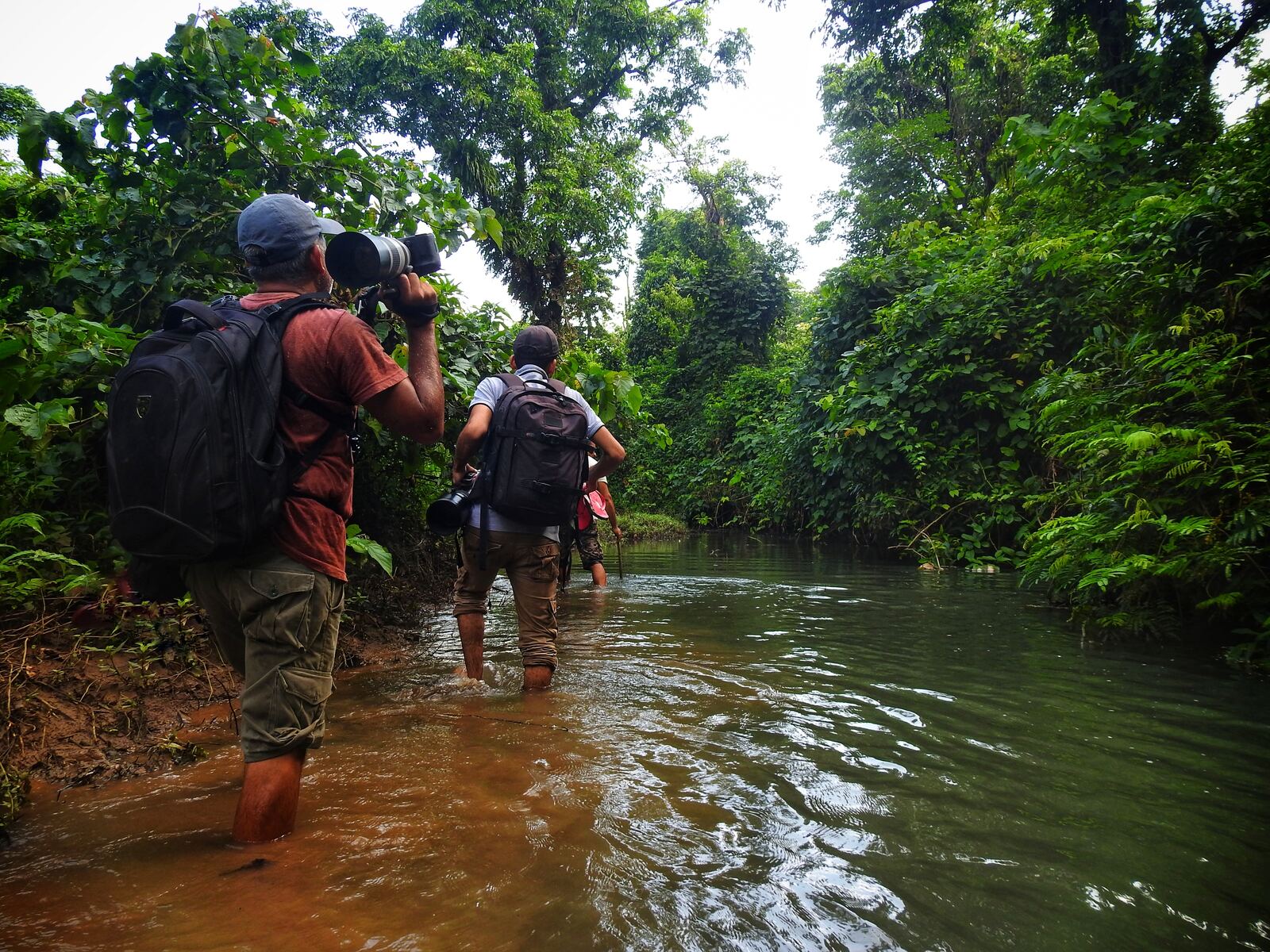
The best light and the most birds come in the first two hours after sunrise and the last hour before dark, so the days are built around them. In Chitwan and Bardia much of it is waiting: at a waterhole, in a canoe drifting at dawn. In the hills we walk slowly and let the flocks come through.
Field supportArtists
I paint birds myself, so there is never a rush to the next spot. If a bird sits well we stay with it, long enough to watch how it moves and sketch. Most afternoons are quiet, good for the morning's drawings.
Field supportTrekkers
Already planning a trek? I can join your group as the birding and nature guide, alongside your trek guide, and turn the same trail into a birding trip.
Naturalist on your trekSample itineraries
Each trip on this site has its own page, with the route on the map, the birds to look for and every day in turn. These longer tours combine them, and any of them can be changed to suit you.
See all trips7-day Chitwan and Kathmandu Valley birding tour
A first taste of Nepal's lowland and hill birding: the forest and rivers of Chitwan, a day in the forest on Phulchowki, and time for the temples of Kathmandu.
Trips with these places: Chitwan Jungle Birding and Wildlife Safari, Kathmandu Birding Day: Phulchowki & Godawari
10-day Koshi Tappu and Chitwan wetland and forest tour
Waterbirds and forest birds: waders, raptors and the Swamp Francolin at Koshi Tappu, then hornbills, rhinos and gharials in Chitwan.
Trips with these places: Chitwan Jungle Birding and Wildlife Safari
14-day Nepal birding expedition
The whole range: the Terai lowlands, the hill forests around Pokhara, and high-altitude birding in Annapurna or Langtang, for birders who want to see as many species as they can.
Trips with these places: Annapurna Sanctuary Birding Trek, Langtang Birdwatching Trek
What's included
- Krishna as your birding guide, from the first morning to the last
- Private transport on the ground
- Rooms in birder-friendly lodges and hotels
- Park entry permits and conservation fees
- Meals as listed in the itinerary
- A spotting scope and field guides to share (bring your own binoculars)
A trip around your birds
Any of these can be shaped around the birds you most want to see, the time you have, how far you like to walk and when you can come. I guide all year round.